Electrochemical Gradient Microfluidic Platform for 3D Cell and Barrier Models
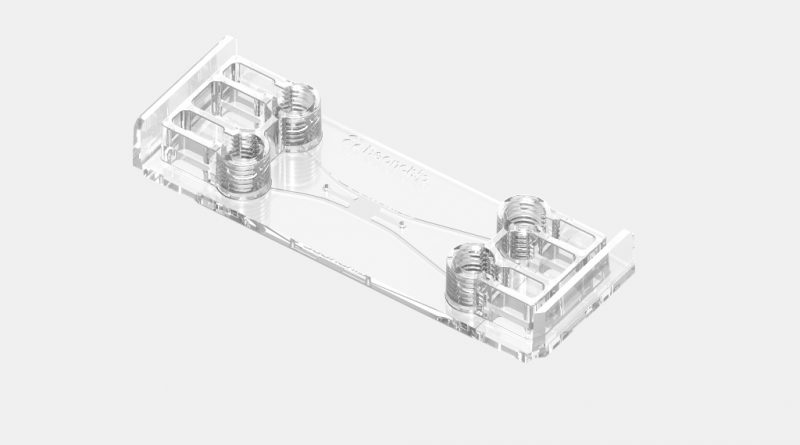
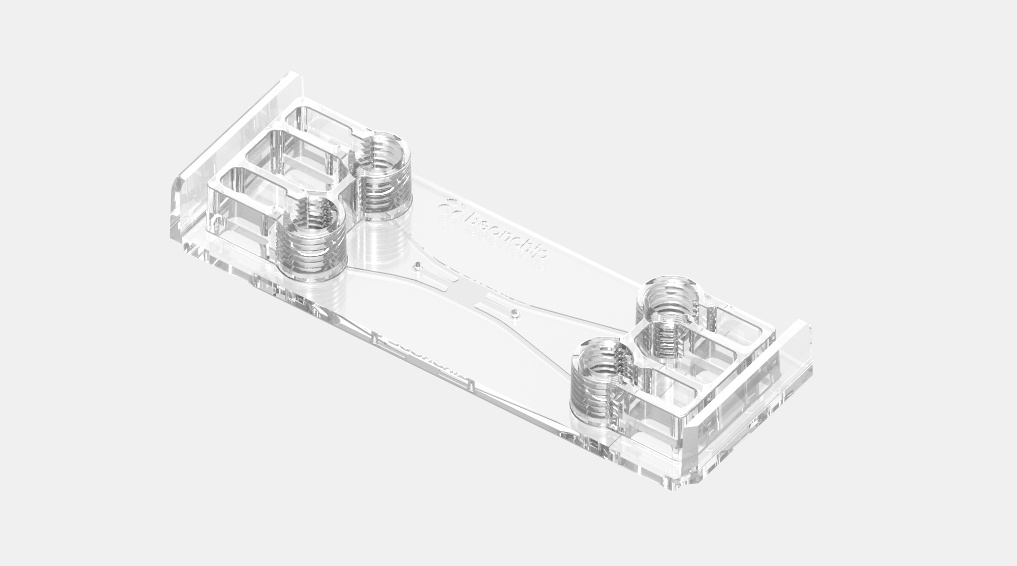
The electrochemical gradient microfluidic platform, Be-Gradient Barrier-Free, is designed by Beonchip for the application of controlled chemical gradients to 3D cell cultures and for the development of advanced barrier models. The device consists of a central 3D cell culture chamber flanked by two lateral microfluidic channels in direct contact with the chamber, enabling precise gradient formation through differential medium composition. This design allows researchers to study chemotaxis, invasion, and migration under physiologically relevant conditions, ideal for applications in preclinical drug discovery and pharmacological screening.
Be-Gradient Barrier-Free is compatible with all major optical microscopy techniques, including inverted phase contrast, fluorescence, and confocal imaging. Its horizontal layout places all functional elements at the same focal plane, supporting high-quality imaging of live and fixed samples throughout long-term experiments critical for reproducible pharmaceutical assays.
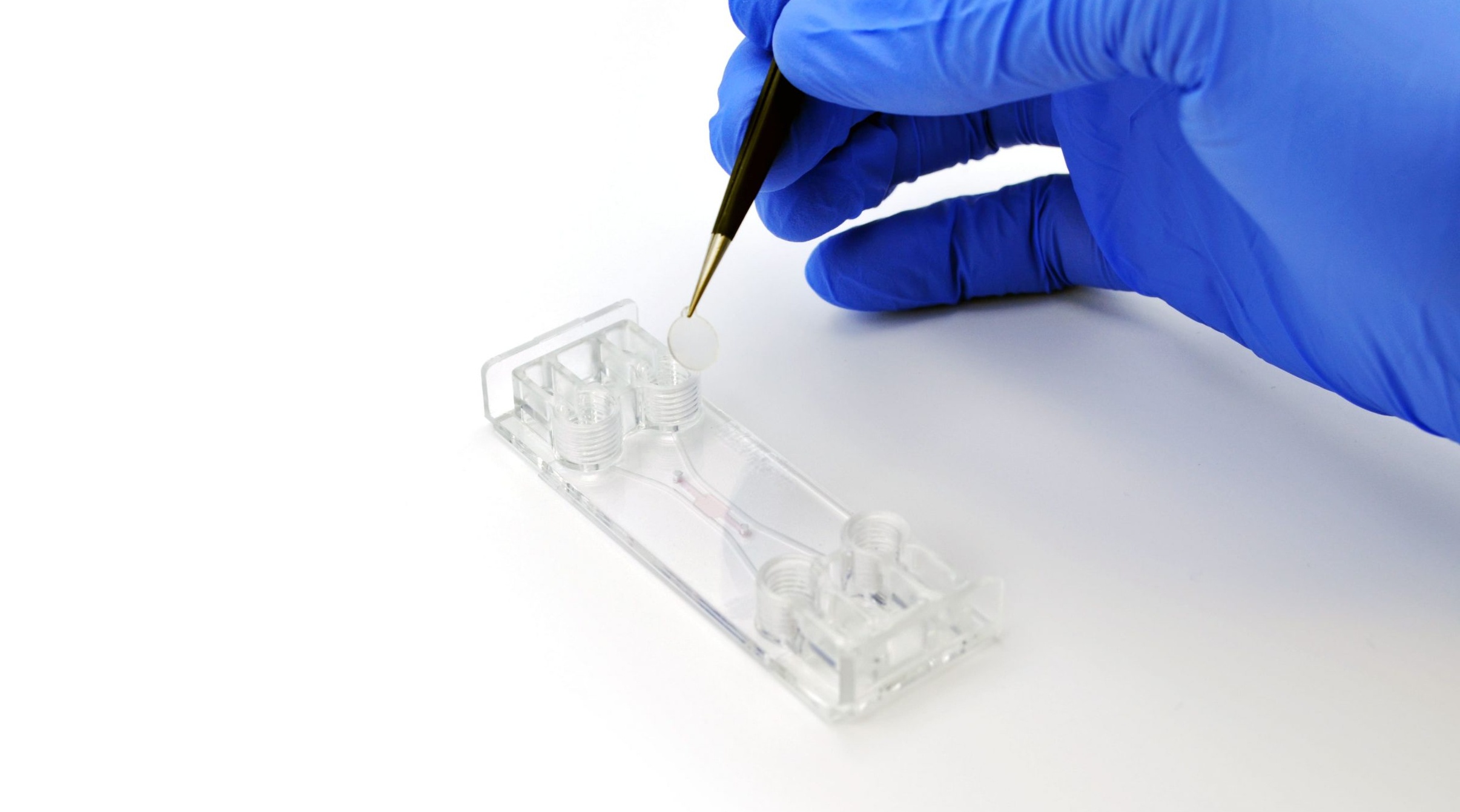
Gradient-Based Microfluidic Platform for 3D Culture
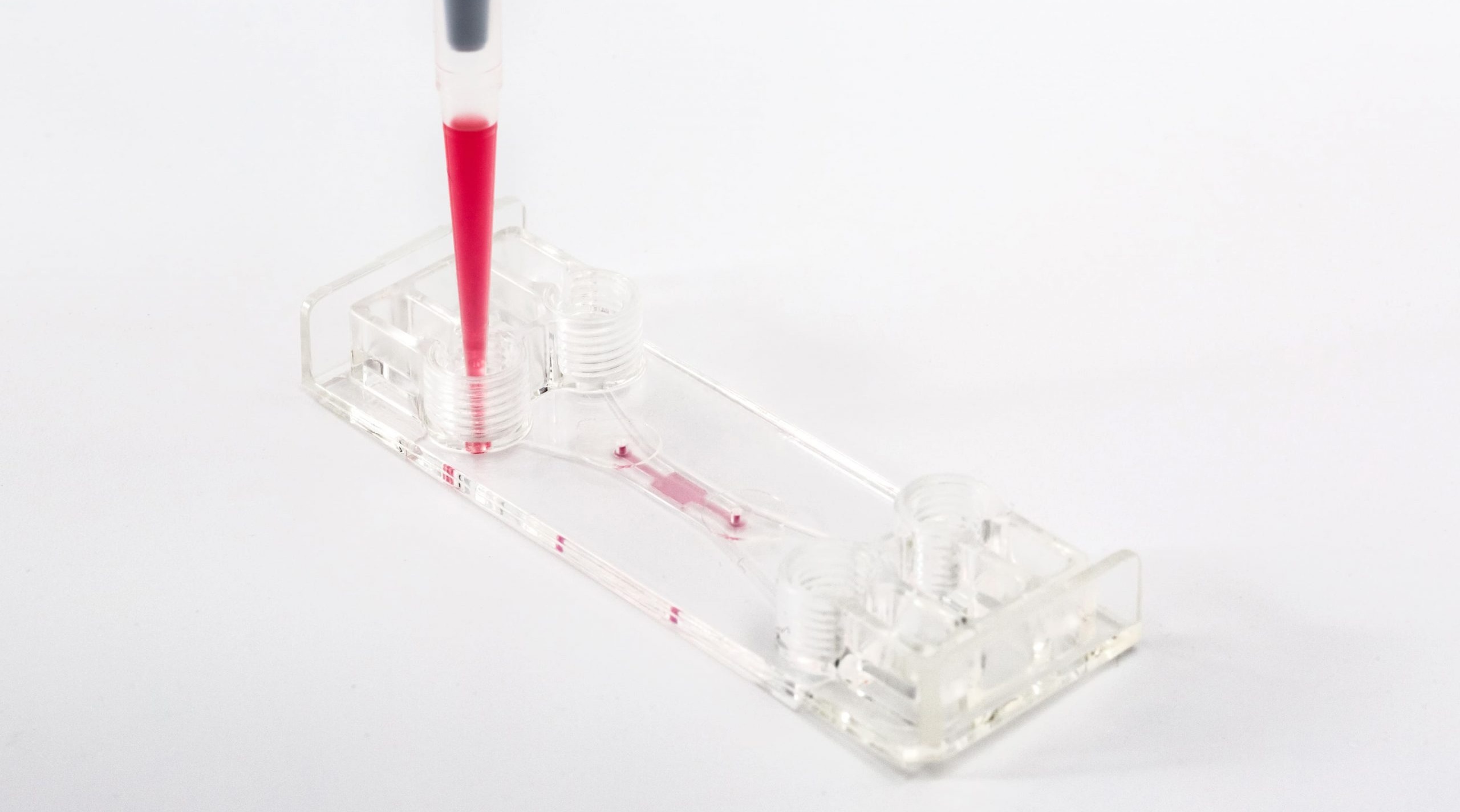
The Be-Gradient platform enables the creation of stable electrochemical gradients across a confined 3D culture environment. By introducing media of different compositions through the lateral channels, researchers can generate controlled chemotactic stimuli within the central chamber. This approach supports studies of cell and spheroid migration, invasion, and directional responses in biomimetic microenvironments, facilitating translational research for therapeutic development.
Cells can be seeded as single-cell suspensions or as aggregates embedded within hydrogels, allowing flexible experimental design. The barrier-free configuration ensures direct communication between the chamber and channels, supporting efficient nutrient and oxygen diffusion into the 3D matrix for physiologically relevant drug testing.
3D Ischaemia and Metabolic Stress Models
Be-Gradient Barrier-Free supports the development of 3D ischaemia models by enabling control over nutrient availability, oxygen diffusion, flow conditions, and cell density. These parameters can be adjusted to reflect tissue-specific metabolic demands, allowing investigation of cellular responses to hypoxia and nutrient deprivation, relevant for preclinical efficacy and toxicity studies.
The perfused lateral channels function as controlled supply routes, while the central chamber confines the 3D culture. This configuration enables reproducible modelling of ischaemic conditions that are difficult to achieve in static culture systems.
Building Barrier, Vasculature, and Angiogenesis Models
The platform is excellent for building barrier models by co-culturing different cell types within a single device. The lateral channels are designed to simulate blood vessels, where endothelial cells can be cultured in close proximity to cells embedded in the central chamber. This arrangement supports direct cell–cell communication across the interface, facilitating studies of drug transport, permeability, and endothelial interactions in a biomimetic model.
Be-Gradient Barrier-Free also enables angiogenesis and endothelization studies by allowing endothelial cells to interact with supporting cell types such as fibroblasts. The direct contact between channels and chamber promotes the formation of vasculature-like networks under controlled conditions, supporting the evaluation of angiogenic therapeutics.
Blood–Brain Barrier and Advanced Co-Culture Models
The electrochemical gradient microfluidic platform can be used to explore blood–brain barrier models by seeding neurons and glial cells within the central chamber, while endothelial cells are cultured in the lateral channels. Similar barrier systems can be developed by varying the selected cell types, supporting a broad range of tissue-specific interfaces for CNS-targeted drug research.
The device architecture enables controlled exchange of nutrients, oxygen, and signalling molecules, supporting physiologically relevant barrier formation and functional assessment.
Imaging-Optimised Design for 3D Microfluidic Studies
The horizontal structure of Be-Gradient Barrier-Free places the chamber and channels at the same height, optimising compatibility with high-resolution imaging. The central chamber is designed to confine hydrogels securely, supporting stable 3D culture throughout the experiment.
Direct communication between the chamber and perfusion channels ensures consistent nutrient delivery and waste removal, supporting long-term viability and reproducibility in complex 3D models, enhancing reliability for preclinical research applications.
Features & Benefits of the Be-Gradient Platform
Main Features
- Central chamber designed for confined 3D cell culture in hydrogels
- Two lateral microfluidic channels in direct contact with the chamber
- Electrochemical gradient generation through differential media perfusion
- Barrier-free architecture for efficient nutrient and oxygen diffusion
- Compatibility with inverted, fluorescence, and confocal microscopy
- Horizontal layout optimised for high-resolution imaging
- Support for co-culture and multi-cell-type experimental designs
Key Benefits
- Enables controlled chemotaxis, invasion, and migration studies
- Supports physiologically relevant 3D ischaemia and metabolic stress models
- Facilitates development of barrier and vasculature-like models
- Improves imaging quality and experimental reproducibility
- Enhances physiological relevance of in vitro 3D culture systems
For more information, please contact Beonchip today.

Quick Contact Beonchip