Journal Club: Photoreceptor Cell Therapy to Treat Advanced Retinal Degeneration
Striatech is pleased to announce its upcoming Journal Club session, “Photoreceptor Cell Therapy to Treat Advanced Retinal Degeneration,” which will be held live on Thursday, February 5, 2026, at 16:00 CET.
The highly anticipated webinar will proudly feature Professor of Developmental Neuroscience Rachael Pearson, from the Ocular Cell and Gene Therapy Group at the Centre for Gene Therapy and Regenerative Medicine, King’s College London, presenting recent advances in photoreceptor replacement strategies for advanced retinal degeneration. The presentation will address the unmet need in patients with irreversible photoreceptor loss and explore cell-based therapeutic approaches aimed at restoring visual function when gene therapy is no longer effective.
Photoreceptor Replacement as a Disease-Agnostic Strategy
Vision is often regarded as our most valued sense and the one we most fear losing. While gene therapy is beginning to show meaningful promise for patients with vision loss caused by known genetic mutations, the majority of patients currently have no treatment options capable of reversing blindness once photoreceptor degeneration has taken place. Photoreceptor replacement therapy, delivered either as cell suspension or as tissue grafts, offers a potential route to vision restoration through the replacement of lost cells and is increasingly recognised as a valid, disease-agnostic therapeutic approach for advanced retinal degeneration.
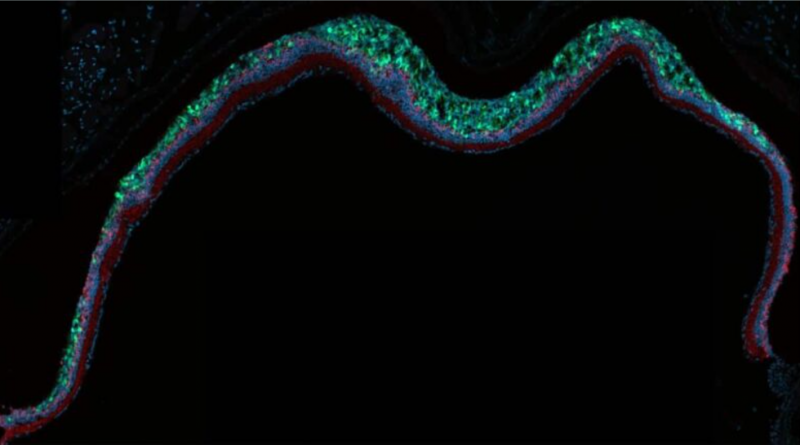
Pearson et al. have previously established protocols for generating rod and cone photoreceptors from human pluripotent stem cells (hPSC). In this work, they demonstrate that hPSC-derived cone photoreceptors can functionally integrate into two distinct mouse models of end-stage retinal disease. The data show that the host retina undergoes extensive remodelling in response to the presence of human cones and that transplanted human cone photoreceptors are capable of driving retinal function across a range of physiologically relevant light intensities.
Using Striatech’s OptoDrum system, Pearson et al. further demonstrate that transplanted animals display light-evoked optomotor head-tracking behaviour. Collectively, these findings support human cone photoreceptor transplantation as a disease-agnostic therapeutic strategy for the treatment of advanced retinal dystrophies.
Journal Club: Photoreceptor Cell Therapy to Treat Advanced Retinal Degeneration
Key Topics & Objectives
- Understanding how photoreceptor transplantation can serve as a disease-agnostic approach to restoring retinal and visual function
- Generation of stage-specific, transplantation-competent photoreceptors from human pluripotent stem cells
- Restoration of retinal function and visually evoked behaviours by human cone photoreceptors in multiple mouse models and stages of advanced retinal degeneration
- Recapitulation of developmental processes within an adult, diseased retinal environment
- Development of a disease-agnostic therapy for advanced retinal degeneration
Background Reading
-
Human cone photoreceptor transplantation stimulates remodeling and restores function in AIPL1 model of end-stage Leber congenital amaurosis.
Procyk CA, Melati A, Ribeiro J, Liu J, Branch MJ, Delicata JD, Tariq M, Kalarygrou AA, Kapadia J, Khorsani MM, West EL, Smith AJ, Gonzalez-Cordero A, Ali RR, Pearson RA.
Stem Cell Reports. 2025 Apr 8;20(4):102470.
doi:10.1016/j.stemcr.2025.102470. -
Restoration of visual function in advanced disease after transplantation of purified human pluripotent stem cell-derived cone photoreceptors.
Ribeiro J, Procyk CA, West EL, O’Hara-Wright M, Martins MF, Khorasani MM, Hare A, Basche M, Fernando M, Goh D, Jumbo N, Rizzi M, Powell K, Tariq M, Michaelides M, Bainbridge JWB, Smith AJ, Pearson RA, Gonzalez-Cordero A, Ali RR.
Cell Rep. 2021 Apr 20;35(3):109022.
doi:10.1016/j.celrep.2021.109022. -
Recapitulation of Human Retinal Development from Human Pluripotent Stem Cells Generates Transplantable Populations of Cone Photoreceptors.
Gonzalez-Cordero A, Kruczek K, Naeem A, Fernando M, Kloc M, Ribeiro J, Goh D, Duran Y, Blackford SJI, Abelleira-Hervas L, Sampson RD, Shum IO, Branch MJ, Gardner PJ, Sowden JC, Bainbridge JWB, Smith AJ, West EL, Pearson RA, Ali RR.
Stem Cell Reports. 2017 Sep 12;9(3):820-837.
doi:10.1016/j.stemcr.2017.07.022.
About the Speaker

Rachael Pearson, Ph.D.
Professor of Developmental Neuroscience
Ocular Cell and Gene Therapy Group, Centre for Gene Therapy and Regenerative Medicine, King’s College London
Rachael received her PhD from University College London. She remained at UCL for many years, moving to UCL’s Institute of Ophthalmology in 2007 to take up a Royal Society University Research Fellowship. In 2020, she and her long-standing collaborator, Professor Robin Ali moved their team to King’s College London, to the Centre for Gene Therapy and Regenerative Medicine. Her research focusses on the development of cell therapy for the treatment of retinal degenerations. She has published more than 50 peer-reviewed papers with several landmark papers and preclinical proof-of-concept studies that have provided the basis for stem cell-derived photoreceptor transplantation. Complementary to this main programme of research, Rachael has strong interests in retinal development and degeneration and how these respective processes may be harnessed for improving regenerative therapies including transplantation and endogenous repair.
Don’t Miss This Inspiring and Insightful Live Webinar! Register Now!
Related Product
Learn more about Striatech