Versatile Microfluidic Platform for ALI and Barrier Research
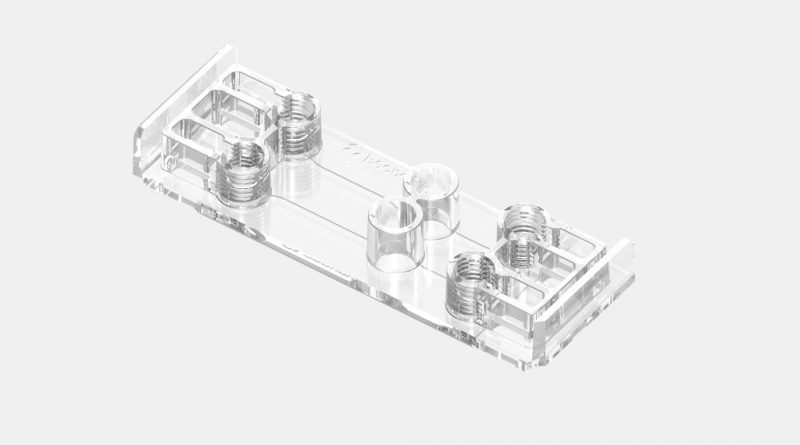
This highly versatile microfluidic cell culture platform is designed by Beonchip to support complex coculture configurations. By integrating an open culture well with a microfluidic channel through a porous membrane, the Be-Transflow platform enables precise interaction between epithelial and endothelial compartments. This architecture is particularly well suited for Air-Liquid Interface (ALI) culture, endothelium–epithelium barrier studies, and investigations of cellular crosstalk across a variety of tissue types, including skin, respiratory tract, and cornea.
Researchers can perform automated medium replacement while maintaining controlled communication between compartments, facilitating studies of toxicity, permeability, and absorption in physiologically relevant conditions.
The Most Versatile Microfluidic Platform
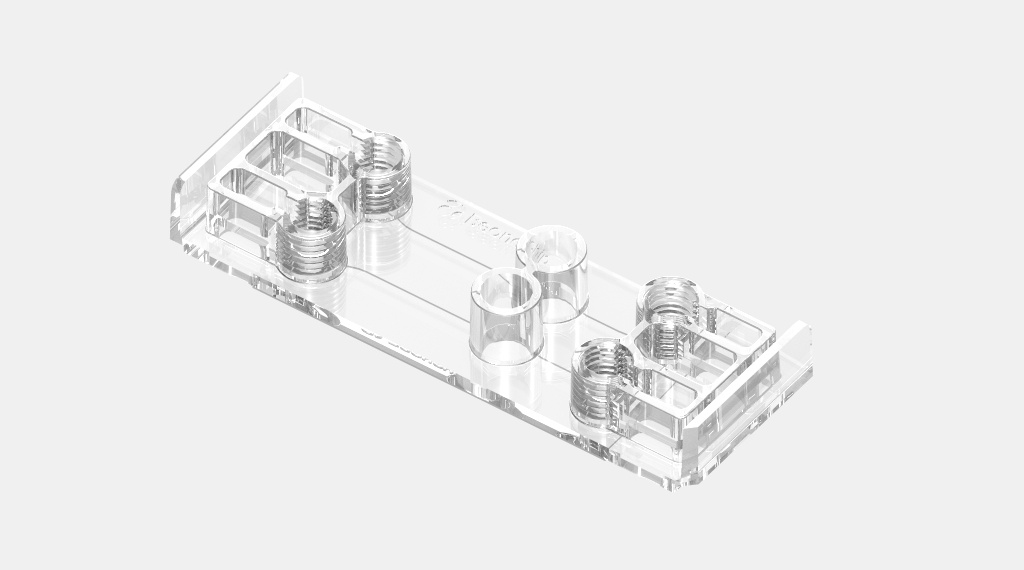
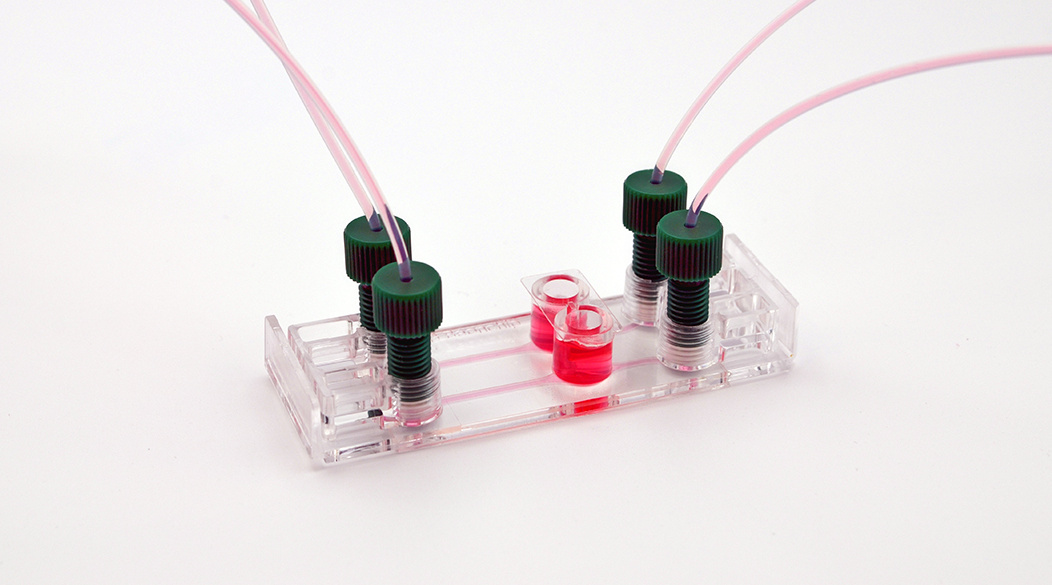
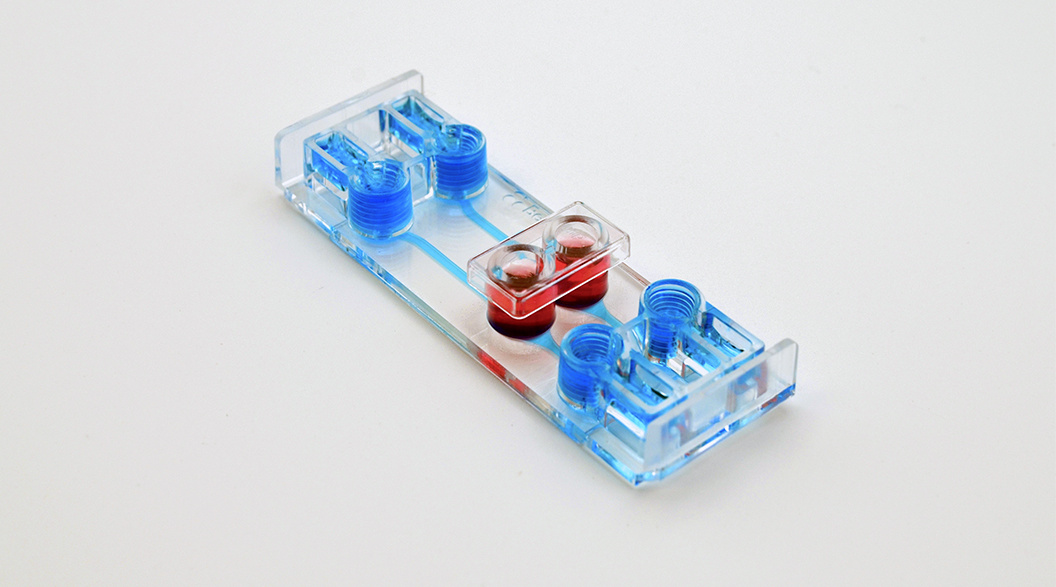
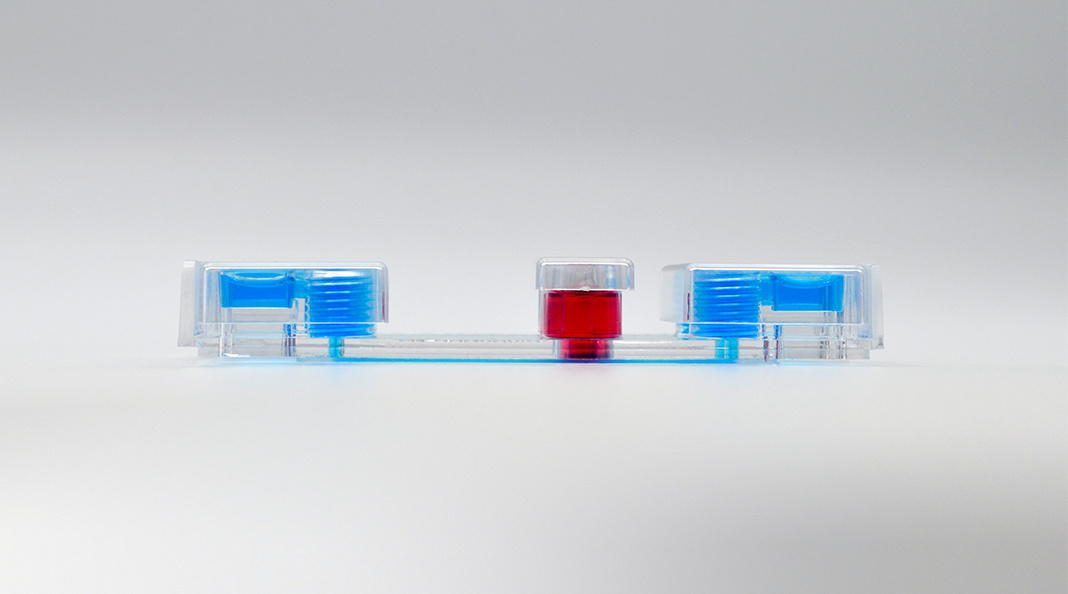
Be-Transflow is the most versatile microfluidic platform designed by Beonchip and is available as a Standard and Custom platform option to support experiments requiring specialised configurations. The Be-Transflow Standard can support complex coculture configurations and barrier studies. The structure consists of a culture well, equivalent in volume to a single well of a 96-well plate, which communicates via a PET porous and transparent membrane with a perfusable microfluidic channel.
Each chip allows the realisation of two independent experiments, with the ability to apply independent flow rates in each channel or join them to create a multi-organ-on-chip model. Beonchip’s patented inlets and outlets system ensures compatibility with gravity-driven flow, syringe, peristaltic, or pressure-based perfusion methods while preventing bubble entry during connection. Adjacent evaporation reservoirs can be filled with PBS or water during incubation and gravity-driven flow culture, providing stability before closing the system with tubing. This design enables precise interaction between epithelial and endothelial compartments under physiologically relevant flow and ALI conditions.
Modeling Epithelial–Endothelial Barriers Under Air-Liquid Interface Conditions
Be-Transflow enables the creation of functional epithelial–endothelial barriers by seeding epithelial cells in the upper well and endothelial cells in the perfusable channel below. The platform accommodates both 2D and 3D cultures, and organoids can be cultured directly onto the PET membrane to interact with adjacent layers under controlled flow and shear stress.
It is particularly suited for modeling skin, respiratory tract, cornea, gut, lung, and Blood–Brain Barrier tissues, where compartmental communication and dynamic perfusion are critical. Researchers can also extract cultured samples from the open well for downstream analysis without disrupting the experimental setup.
Investigating Cellular Crosstalk, Migration, and Metastasis
The dual-compartment design of Be-Transflow Standard supports studies of cellular crosstalk, invasion, and migration across the membrane. By selecting appropriate membrane pore sizes, researchers can control molecular and cellular exchange to mimic physiological and pathological processes. The system also allows investigation of interconnected organ systems, such as lung–cardiovascular or muscle–skeletal–bone models, where communication between compartments can influence the biological response of one tissue to another. These capabilities provide a physiologically relevant environment for mechanical studies of barrier function, tissue-specific signaling, and metastasis.
Flow-Based Studies of Circulating Particles
Be-Transflow Standard supports research of circulating cells, extracellular vesicles, nanoparticles, encapsulated drugs, bacteria, viruses, and tumor cells under dynamic flow conditions. The perfusable channel reproduces physiologically relevant shear stress and flow profiles, enabling detailed studies of leukocyte adhesion, endothelial activation, and transmigration. These features are particularly valuable for research into inflammation, immune responses, metastasis, and targeted drug delivery, providing mechanistic insights that static cultures cannot replicate.
Integration with Advanced Analytical Techniques
The platform is compatible with a wide range of downstream analytical and imaging workflows, including high-resolution live and fixed-cell microscopy, immunofluorescence, SEM imaging and plate-reader studies. 3D bioprinting can also be performed on the open well. Cultured membranes can be extracted for histology, SEM, or molecular analyses, while cells can be harvested for flow cytometry, qPCR, western blotting, permeability assays, or optical mapping. Automated liquid exchange and precise flow control enhance reproducibility and scalability, making Be-Transflow Standard suitable for both exploratory research and advanced preclinical studies.
Custom Configurations for Specific Research Needs
For experimental programs requiring higher levels of specificity, Be-Transflow Custom allows modification of channel dimensions, membrane properties or material, and base type to match defined shear stress conditions, intercompartmental flux, or 3D architecture requirements. This flexibility enables highly tailored models for organoid culture, circulating particle assays, or complex endothelium–epithelium barrier investigations, supporting more precise and physiologically relevant preclinical research outcomes.
Advancing Preclinical and Translational Research
Be-Transflow Standard represents a transformative tool for preclinical research by combining open-well accessibility, perfusion, and precise membrane-mediated compartmentalisation. The platform supports ALI culture, dynamic flow, and complex 2D/3D coculture strategies, enabling detailed studies of epithelial–endothelial barriers, cellular crosstalk, invasion, and migration under physiologically relevant conditions. Its PET membrane, flexible flow configurations, and compatibility with advanced analytical techniques enhance the predictive value of in vitro models, providing a robust foundation for drug discovery, toxicology, and disease modeling.
Features & Benefits of the Be-Transflow
Main Features
- Open upper culture well with a volume equivalent to one well of a 96-well plate
- Porous, transparent PET membrane connecting the culture well to a perfusable microfluidic channel
- Customisable membrane pore sizes to regulate intercompartmental transport and crosstalk
- Support for 2D and 3D cultures, including direct culture of organoids onto the membrane
- Optimised design for Air–Liquid Interface (ALI) culture
- Independent perfusion of microfluidic channels with controlled flow and shear stress
- Channels can be interconnected to create multi-organ-on-chip models
- Inlet/outlet system compatible with syringe, peristaltic, and pressure-based pumps
- Patented bubble-free connection for perfusion setup
- Evaporation reservoirs positioned next to medium reservoirs for incubation stability
- Compatible with advanced imaging and analytical workflows
Key Benefits
- Enables biomimetic modeling of epithelial–endothelial barriers under ALI conditions
- Supports invasion, migration, and transmigration studies
- Allows investigation of circulating particles under flow
- Improves physiological relevance of in vitro models
- Supports reproducible and scalable experimental designs
For more information, please contact Beonchip today.
Quick Contact Beonchip