Journal Club: Gene-Agnostic Gene Therapy to Preserve Vision
Striatech is pleased to announce its next Journal Club: Gene-Agnostic Gene Therapy to Preserve Vision, which will be held on Thursday, December 11, 2025.
The event will feature Constance Cepko, Ph.D., Bullard Professor of Genetics and Neuroscience at Harvard Medical School (Genetics & Ophthalmology, Blavatnik Institute; HHMI), presenting new findings on metabolic, mutation-independent strategies to preserve cone photoreceptors in inherited blindness. The presentation will explore how enhancing retinal pigment epithelium metabolism via AAV-mediated MCT2 expression may sustain daylight and color vision across diverse genetic forms of retinal degeneration.
From Genetic Diversity to Common Therapeutic Targets
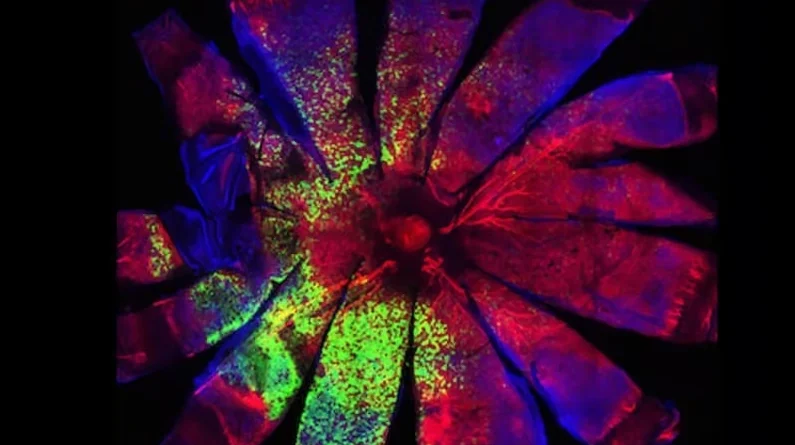
There are over 200 human disease genes that can result in blindness. Although gene therapy approaches that augment or edit each individual disease gene are feasible, this strategy would be highly costly and difficult to implement at scale. To develop a broader and more universal alternative, Cepko et al. have been investigating mouse models of blindness, looking for defects that are shared across different genotypes. Work in these mouse models led to the hypothesis that oxidative damage, metabolic insufficiency, and inflammation contribute to the loss of color and daylight vision. To target these mechanisms, multiple classes of genes were delivered using adeno-associated viruses (AAVs). The genes that were effective in extending visual function will be presented.
Journal Club: Gene-Agnostic Gene Therapy to Preserve Vision
Key Topics & Objectives
- Why do cone photoreceptors die even though they don’t express the disease gene?
- Which genes can combat oxidative damage, inflammation, and glucose shortage in mouse models of retinitis pigmentosa?
- A new model of dry age-related macular degeneration
- A potential therapy for dry age-related macular degeneration
Background Reading
-
AV-Txnip prolongs cone survival and vision in mouse models of retinitis pigmentosa.
Xue Y, Wang SK, Rana P, West ER, Hong CM, Feng H, Wu DM, Cepko CL.
bioRxiv 2021.01.27.428411 January 27, 2021.
doi:10.7554/eLife.66240. -
ANrf2 overexpression rescues the RPE in mouse models of retinitis pigmentosa.
Wu DM, Ji X, Ivanchenko MV, Chung M, Piper M, Rana P, Wang SK, Xue Y, West E, Zhao SR, Xu H, Cicconet M, Xiong W, Cepko CL.
JCI Insight. 2021 Jan 25;6(2):e145029.
doi:10.1172/jci.insight.145029. -
RPE-specific MCT2 expression promotes cone survival in models of retinitis pigmentosa.
Chandler LC, Gardner A, Cepko CL.
Proc Natl Acad Sci U S A. 2025 Apr 8;122(14):e2421978122.
doi:10.1073/pnas.2421978122.
About the Speaker

Constance Cepko, Ph.D.
Bullard Professor of Genetics and Neuroscience
Harvard Medical School: Genetics & Ophthalmology (Blavatnik Institute) • HHMI
Dr. Cepko received her Ph.D. from the Massachusetts Institute of Technology, working with Phillip Sharp. She stayed at MIT as a postdoctoral fellow in the laboratory of Richard Mulligan, where she was involved in the development of retrovirus-mediated gene transduction. Her current research is focused on development and diseases of the retina, addressing questions regarding the mechanisms of cell-fate determination and developing gene-agnostic gene therapy to prolong vision.
Dr. Cepko is a member of the American Academy of Arts and Sciences and the National Academy of Sciences. She has received multiple awards for both her research and mentoring. She has launched and directed two Ph.D. graduate programs and is currently serving as Co-Director of the Leder Human Biology and Translational Medicine Program.
Don’t Miss This Inspiring and Insightful Live Webinar! Register Now!
Related Press Release
Learn more about Striatech